Operational Field Guide for Safety Compliant Standard Tree Removal
ANSI Z133 Standard Tree Removal is the regulated arboricultural procedure for systematically felling and dismantling trees using certified protective gear (PPE), rigorous hazard evaluations, precise directional cuts, planned escape routes, and established drop-zone perimeters to prevent injury and property damage.
-
Why Safety Matters: Arboriculture is rated among the most hazardous industries in North America due to dangers from falling timber, overhead electrical lines, and high-speed cutting machinery.
-
Regulatory Compliance: The Washington State Department of Labor & Industries (L&I) enforces these standards through DOSH (Division of Occupational Safety & Health) across all commercial, municipal, and private tree operations to minimize catastrophic injuries and insurance liabilities.
- Value for Property Owners: These standards provide residential landowners with practical guidelines to DIY small backyard trees safely and identify severe hazards, such as electrical wire proximity or trunk decay that require certified professionals. Understanding ANSI Z133 also empowers property owners to vet hired tree contractors, ensuring crews follow state mandated safety practices, wear certified gear, and protect property from costly damage
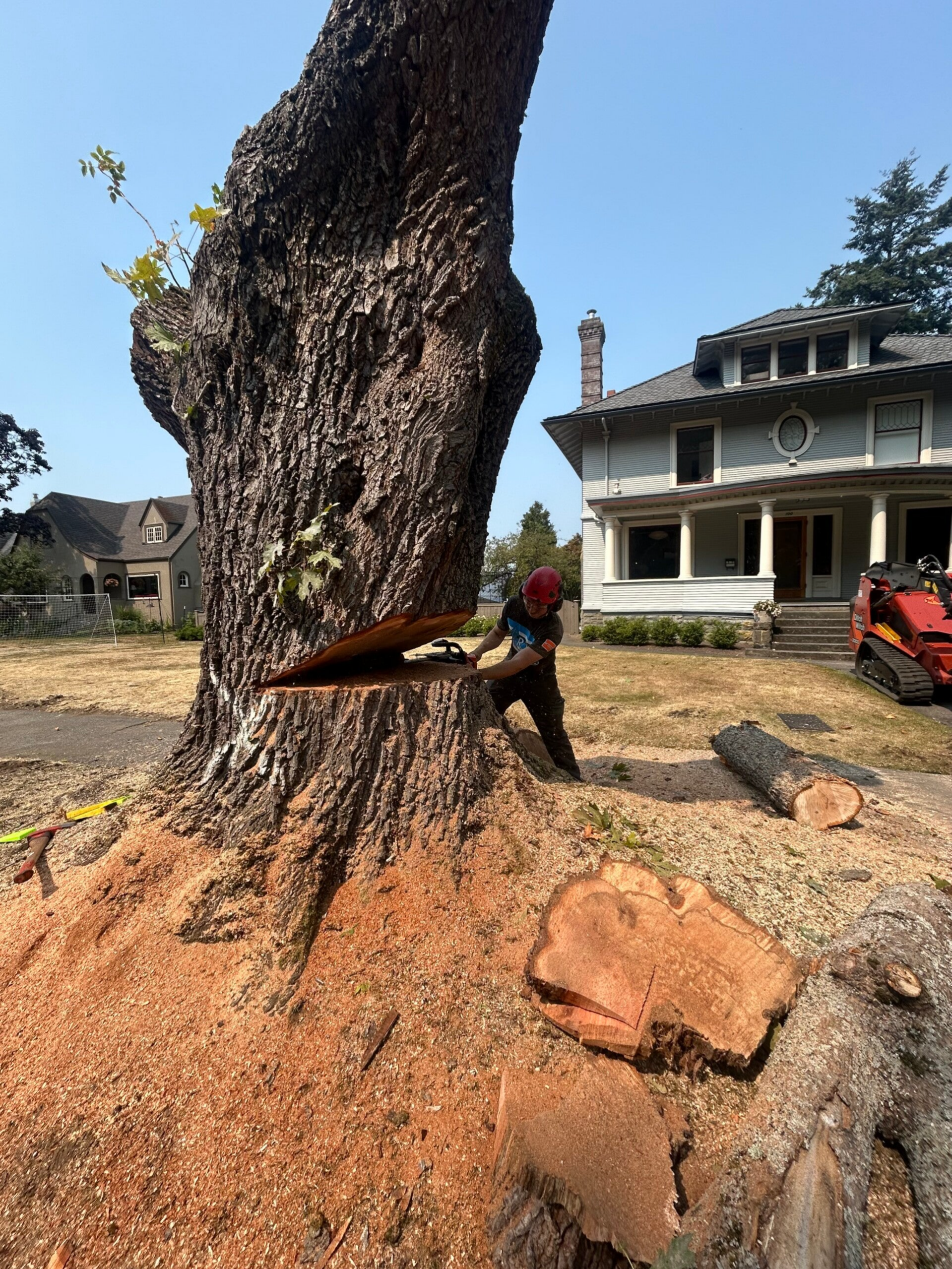
Directional notch cuts are crucial for tree felling. Before the felling process, however, it is important to wear the proper gear for the task.
Mandatory Personal Protective Equipment (PPE)
Before entering the tree drop perimeter, every worker and ground crew member must wear approved PPE.
| Gear Category | Standard Specification | Purpose |
|---|---|---|
| Head Protection | ANSI Z89.1 Type I/II | Deflects falling canopy debris and structural branches |
| Eye & Face Protection | ANSI Z87.1 Impact Goggles or Mesh Visor | Prevents eye injury from high-velocity wood chips and sawdust |
| Hearing Protection | Ear muffs or plugs rated NRR 25+ | Guards against long-term hearing loss from chainsaw motors |
| Leg Protection | Chainsaw chaps (UL Classified/ASTM F1897) | Stops chainsaw instantly upon accidental contact |
| Footwear & Apparel | Heavy-duty non-slip boots and high-visibility vest | Extra safety measure for proper fieldwork |
Essential Safety Equipment & Gear
PPE serves as the operator's primary physical barrier against severe injury. Under ANSI Z133 standards, all protective gear shown in the diagram must be up to inspection and worn before entering the active work zone. This gear provides a vital defensive aid against direct impacts and acoustic trauma exceeding 85 decibels.
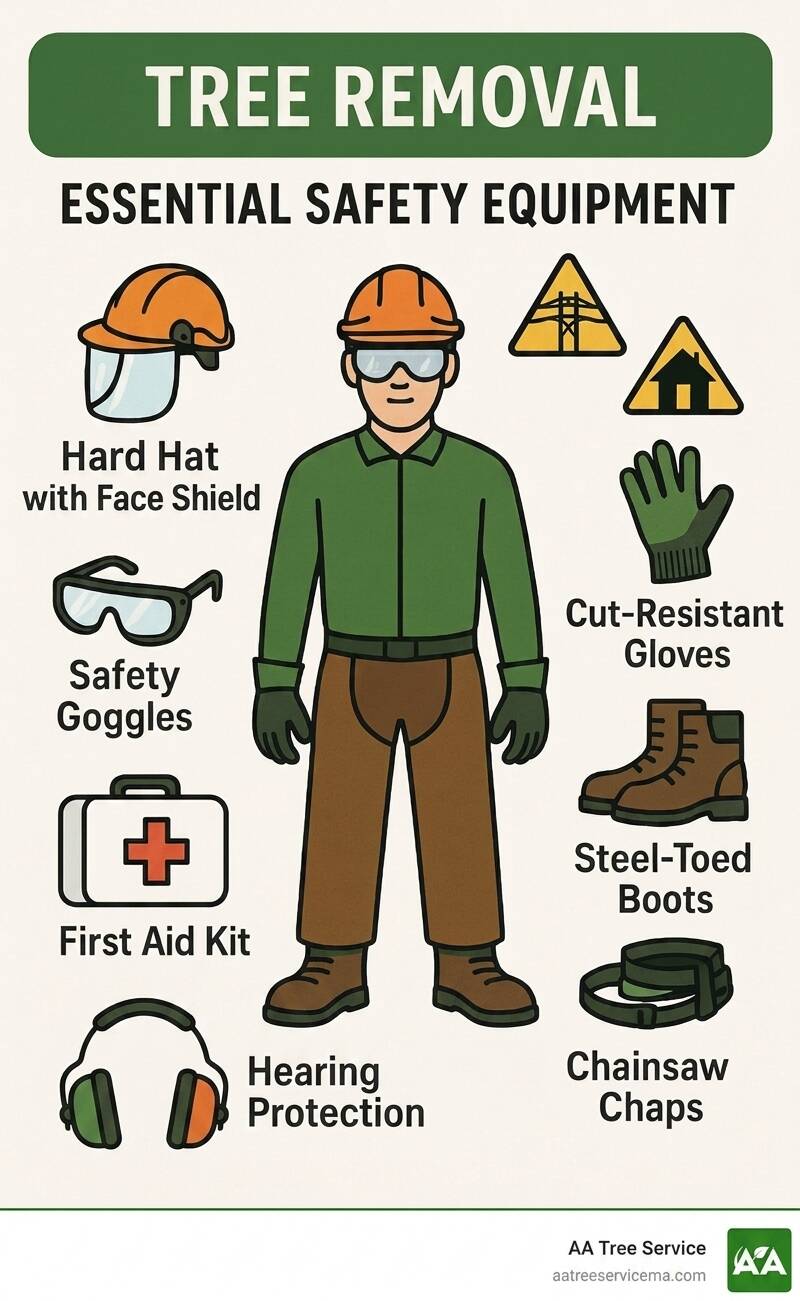
A complete safety setup combines head-to-toe protection along with immediate emergency supplies. Keeping a first aid kit accessible and wearing ballistic-grade leg and eye protection ensures that unforeseen tool kickback or structural wood failures do not result in fatal injuries.
Pre-Work Tree & Site Hazard Assessment
Perform a 360-degree inspection of the work site before touching a chainsaw.
1. Electrical Proximity
Identify all overhead utility and power lines. Maintain a minimum approach distance of at least 10 feet for non-qualified workers.
2. Tree Health & Lean
Check trunk base for fungal decay, hollow cavities, carpenter ant infestation, and root damage. Determine the tree's natural lean and heavy side branches.
3. Overhead Canopy Hazards
Scan for "widow makers" (loose, dead hanging limbs) and interlocking branches from neighboring trees.
4. Environmental Conditions
Never fell trees during high wind gusts (exceeding 20 mph), ice loading, or lightning storms.

Drop Zone & Escape Route Layout ⚠️
Establish clear spatial boundaries to protect crew members during the fall.
The Exclusion Drop Zone
Establish a circular perimeter equal to at least 1.5 to 2 times the total height of the tree. No non-essential personnel are allowed inside this zone during cutting.
Dual 45-Degree Escape Paths
Clear two unobstructed exit routes extending diagonally backward at 45-degree angles opposite the planned direction of fall.
Path Maintenance
Remove all brush, loose tools, and tripping hazards along both escape routes before beginning the notch cut.
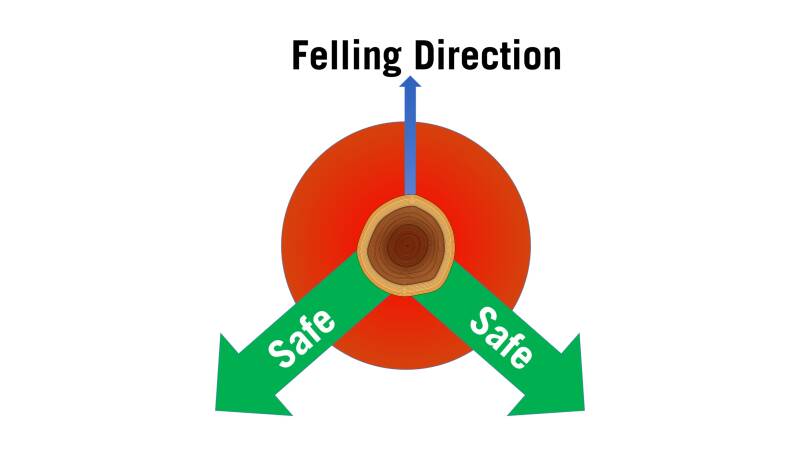
Directional Felling Execution: Step-by-Step Guide
Step 1: The Face Notch: Directional Cut
Make a directional notch facing the exact direction of fall. The notch depth must reach approximately 1/3 of the trunk's total diameter. Ensure the top and bottom cuts meet cleanly without bypassing.
Step 2: Hinge Wood Retention
Do not cut all the way through the trunk. Preserve the hinge, a solid band of intact wood equivalent to approximately 10% of the trunk's diameter to guide the tree straight to the ground.
Step 3: The Back Cut
Execute a flat, horizontal cut from the opposite side of the notch, positioned slightly higher than the bottom corner of the face notch. Insert felling wedges as you cut to prevent saw pinching.
Step 4: Retreat via Escape Path
As soon as the tree begins its committing fall, shut down the saw and walk immediately down your pre-cleared 45 degree escape path, keeping your eyes on the falling canopy.
Danger / Unsafe Shortcut Warning:
Never cut all the way through the trunk (straight push-cut) or bypass the directional notch. Cutting through hinge wood causes uncontrollable falls, barber-chair splits, and severe equipment kickback.

Create Your Own Website With Webador